
7 QR Menu Upselling Strategies That Actually Increase Check Averages
Most restaurants install a QR menu and call it a day. They put up the same items they had on their paper menu, in the same order, with the same descriptions. Then they wonder why digital ordering doesn't move the needle on revenue.
The restaurants making real money with QR menus treat them as a sales tool — not just a menu display.
Here's what actually works.
Why QR Menus Are the Best Upsell Environment You Already Have
Before the strategies: understand why QR menus outperform server-driven upselling in many contexts.
No social pressure. Guests browse at their own pace. They don't feel rushed by a server hovering nearby. Research consistently shows people spend more when browsing independently.
Visual hierarchy works. A QR menu can guide the eye toward high-margin items in ways a printed menu can't (because it doesn't change based on which items you want to push).
Modifiers are easy to add. "Would you like to add avocado?" in conversation feels awkward. A checkbox on a screen is frictionless.
You can A/B test. Unlike printed menus, QR menus let you test different item placements, descriptions, and prices — and see the results in days.
Strategy 1: Put Your Most Profitable Items First
Guests read QR menus the same way they read web pages — with an F-pattern, front-loaded to the top-left.
The move: Put your 3–5 highest-margin items in the first visible positions of each category. Don't bury the ribeye on page 2 of mains.
How to do it: Calculate contribution margin (price minus ingredient cost), not just gross sales volume. A $22 pasta that costs $4 to make outperforms a $38 steak that costs $20 to make, every time.
Result: Operators who restructure menu positioning this way typically see a 3–7% increase in average check without changing a single price.
Strategy 2: Write Descriptions That Sell, Not Describe
"House salad. Mixed greens, tomato, cucumber, dressing." Congratulations — you've described a salad. You haven't sold anything.
Compare: "Market salad. Baby arugula, heirloom tomatoes, shaved Pecorino, toasted pine nuts, finished with our house-made lemon-herb vinaigrette."
Descriptive menus sell more. Full stop. The research on this goes back decades (menu engineer Gregg Rapp has documented this extensively), and QR menus benefit even more because guests have time to actually read.
What to include:
- Specific ingredient sourcing where relevant ("grass-fed," "house-made," "local farm")
- Preparation method (braised, wood-fired, slow-cooked)
- Flavor profile (bright, smoky, umami-forward)
- Emotional language (crowd favorite, chef's recommendation)
What to avoid:
- Generic adjectives ("delicious," "fresh," "tasty")
- Redundant information (don't write "served hot" for a soup)
- Ingredient-list format (that's a nutrition label, not a menu)
Strategy 3: Use Modifier Groups as Upsell Prompts
Every add-on question is a revenue opportunity. The key is making it feel like customization rather than a cash grab.
High-performing modifier setups:
| Prompt | Add-On | Typical Attach Rate |
|---|---|---|
| "Add a protein to your salad?" | Grilled chicken +$4, Salmon +$7 | 22–35% |
| "Make it a meal?" | Add soup or salad +$5 | 18–28% |
| "Upgrade your side?" | Truffle fries +$3 | 25–40% |
| "Add a dessert at the table?" | Shown at checkout | 8–15% |
Setup tip: Sequence matters. Show the upgrade prompt before the guest taps "Add to Order," not after. Post-add prompts get ignored.
Strategy 4: Surface Pairings Directly on Item Pages
Alcohol pairings are the highest-margin upsell in most full-service restaurants. The problem: servers forget, feel awkward, or are too busy to consistently recommend them.
A QR menu can show the pairing automatically every time.
Example flow:
- Guest taps "Braised Short Rib"
- Below the description, they see: "Pairs well with: Malbec ($12) · Old Fashioned ($14) · Craft Dark Lager ($8)"
- Single tap adds the drink to the order
What platforms support this: Menu Tiger, GloriaFood, and most custom QR menu builders allow related item links. Square Online and Toast Online Ordering support it with some configuration.
Expected lift: Restaurants that implement consistent pairing suggestions report a 10–20% increase in beverage attachment rates.
Strategy 5: Create Bundle Deals That Feel Like Value
Combo pricing works in QSR. The same psychology applies to full-service — you just need to position it as a curated experience rather than a meal deal.
Examples:
- "Chef's Night In" — Appetizer + Entrée + Dessert, save $8 versus ordering separately
- "Date Night Package" — Two entrées + bottle of wine + dessert for two, priced 12% below à la carte
- "Brunch Bundle" — Cocktail + entrée + pastry, presented as a package with a name
Why it works: Bundles increase check size and reduce decision fatigue. When a guest sees a clear package, they don't have to think — they just say yes or no.
Margin note: Structure your bundles so the "savings" come from items with lower food cost. The guest feels like they're getting a deal; you're actually improving your overall margin mix.
Strategy 6: Leverage the Checkout Screen
Most QR menu platforms show a cart/checkout screen before the guest submits their order. This is prime real estate.
What to show at checkout:
- "Guests who ordered X also enjoyed Y" (social proof)
- "You're $X away from a complimentary [item]" (threshold-based incentive)
- "Don't forget dessert" with a featured item and photo
- A one-tap option to add the most popular add-on (extra sauce, side, drink)
What not to do: Bombard the checkout screen with 12 different upsell prompts. Pick one or two. More than that creates friction and causes guests to abandon the order.
Strategy 7: Use Photos Surgically, Not Universally
Every item should not have a photo. That's a common mistake. When everything has a photo, nothing stands out.
Use photos for:
- Your highest-margin items
- Items you want to drive (new additions, seasonal specials)
- Items that photograph well and look visibly appealing
Skip photos for:
- Commodity items (plain coffee, water, bread)
- Items where the description does the work
- Anything that photographs poorly (stews, soups, heavily-sauced dishes in bowls)
The rule of thumb: About 20–30% of items should have photos. This creates visual anchors that draw the eye toward items you've chosen intentionally — which should be the items you most want to sell.
Putting It Together: A Quick Audit
Run this audit on your QR menu right now:
- Top 3 positions in each category = highest-margin items?
- Item descriptions are at least 2 sentences with specific details?
- At least 3 modifier groups per category with add-on options?
- Drink pairings shown on at least your top 5 entrées?
- At least one bundle offer visible on the menu?
- Checkout screen shows one relevant upsell?
- Photos limited to 20–30% of items, placed intentionally?
If you check all seven: you've got a QR menu that sells. If you're missing most of them: you've got a digital brochure.
The restaurants treating QR menus as active sales tools are pulling $3–$8 more per cover than those who don't. For a 50-cover restaurant doing two turns a night, that's real money.
More Articles
AI-Powered Restaurant Inventory Forecasting: Reduce Waste and Boost Profits
Discover how AI inventory forecasting predicts demand, optimizes orders, and reduces food waste. Machine learning tools for smarter restaurant inventory management.
Appetito Menu Review: Multilingual QR Menus for Restaurants
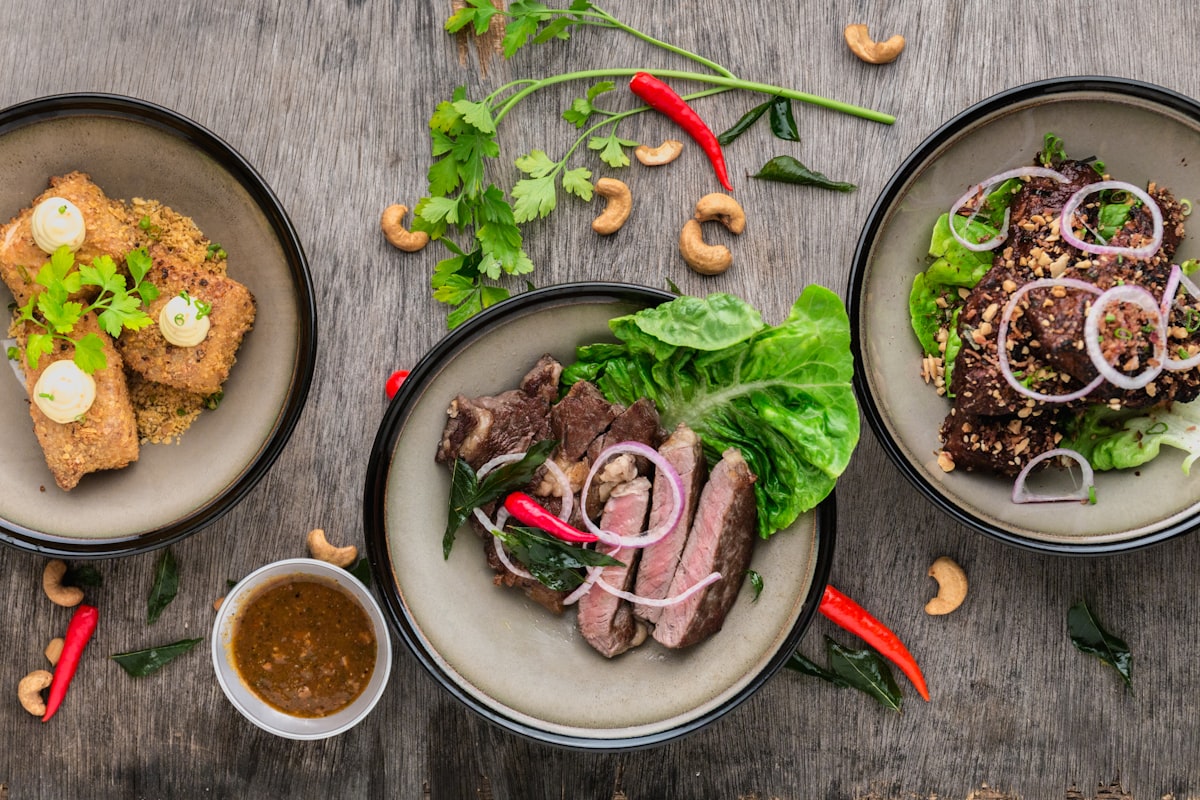
Complete Appetito Menu review covering multilingual QR menu features, pricing, setup process, and how it compares to Fuudey, Menu Tiger, and alternatives.
Best Free QR Code Menu Generator in 2025 (7+ Reviewed)
We tested 8 free QR code menu generators including Fuudey, QR Menu Creator, Menuu, ScanIt.menu, and more. Full comparison with pricing, features, and honest reviews.